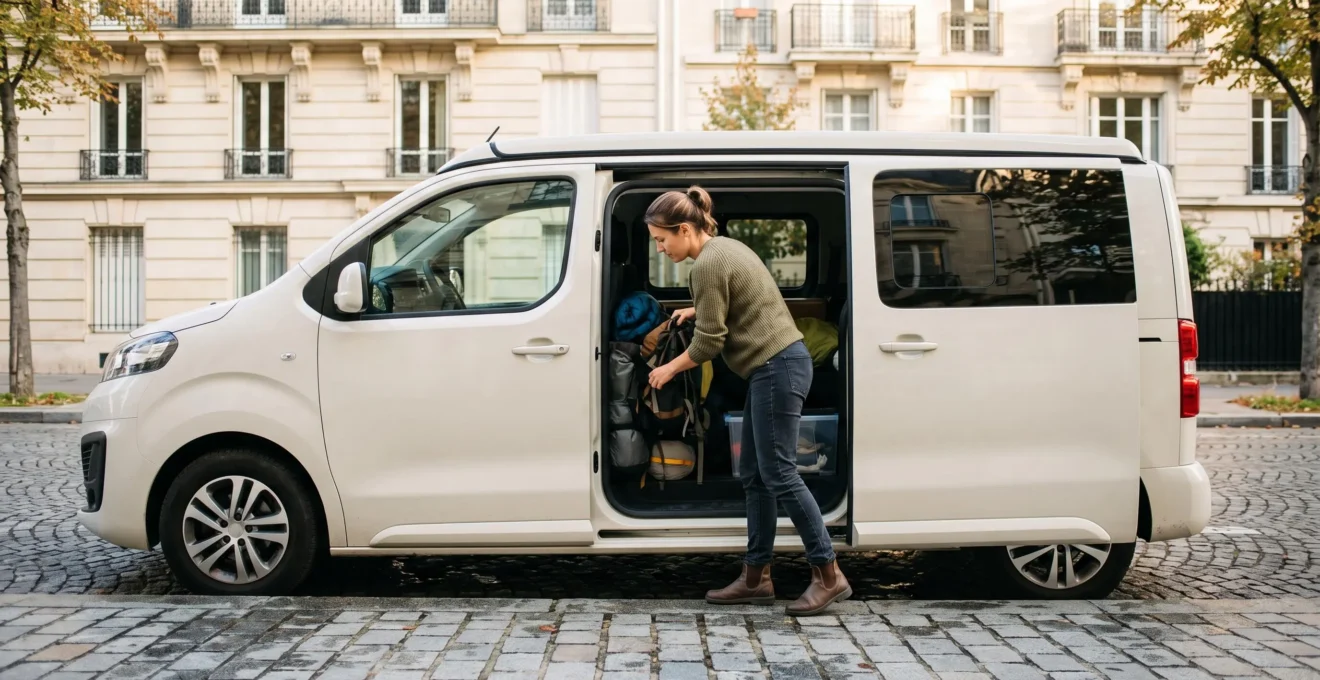
Landing at Paris Charles de Gaulle Airport marks the beginning of countless European adventures, yet the journey from arrivals hall to open road often proves more complicated than anticipated. Navigating public transport with luggage, locating rental agencies across the city, and battling Paris traffic before the adventure even begins can consume precious hours from a limited holiday window. The solution increasingly favoured by experienced road trippers transforms this logistical headache into seamless departure: collecting a campervan directly at the airport.
For couples planning their first fortnight of van travel through France and neighbouring countries, three strategic decisions determine whether the experience unfolds smoothly or stumbles at the starting line. Choosing airport delivery over city pickup, matching vehicle specifications to actual trip requirements, and completing thorough pre-departure preparation collectively unlock the freedom and spontaneity that make campervan holidays compelling in the first place.
- Why choose Paris as your campervan adventure starting point?
- What to consider when selecting your campervan in Paris
- Airport delivery versus city pickup: which option suits you best?
- Essential preparations before hitting the road
- Top routes and destinations from Paris by campervan
- Common questions about campervan hire in Paris
- Making the journey count from touchdown onwards
Why choose Paris as your campervan adventure starting point?
Paris sits at the geographical crossroads of Northern Europe, positioning travellers within striking distance of remarkably diverse landscapes and experiences. The capital’s location transforms what might appear as merely a convenient international flight destination into a strategic launching pad for multi-country exploration. Normandy’s dramatic coastline lies just 2.5 hours northwest, the Champagne region’s rolling vineyards appear within 90 minutes to the east, whilst Brussels emerges after a comfortable 3-hour drive north.
This geographical advantage matters particularly for travellers working within a two-week timeframe. Rather than dedicating entire days to repositioning between major destinations, the compact distances across northern France and into Belgium, Luxembourg, and the Netherlands allow for genuine variety without exhausting drive times. Strasbourg’s half-timbered Alsatian architecture sits roughly four hours east, Mont-Saint-Michel’s island abbey appears after three hours to the west, and Amsterdam’s canal-ringed centre becomes accessible within five hours north.
Charles de Gaulle Airport’s international connectivity eliminates the need for connecting transport to reach rental collection points. Direct flights from London, Edinburgh, Manchester, and dozens of other UK cities deliver travellers to the doorstep of their campervan journey without intermediate hotel stays or complicated transfer arrangements. This seamless transition from aircraft to vehicle proves especially valuable when departure flights land mid-afternoon, preserving enough daylight to reach first-night destinations outside the capital.
The apparent contradiction between Paris’s reputation as a complex urban centre and its utility as an efficient departure point resolves neatly when airport delivery bypasses city navigation entirely. Travellers never need to master Périphérique ring road protocols, decipher arrondissement parking restrictions, or navigate narrow historic streets in an unfamiliar vehicle. The motorway network radiating from CDG provides straightforward access to all compass points, whether heading toward coastal Brittany, mountainous Vosges, or the flat cycling territories of Flanders.
France’s growing enthusiasm for campervan travel reflects in recent registration figures. Between November 2024 and October 2025, France recorded 26,766 new campervan and motorhome registrations, with Brittany, Normandy, and the Loire and Nouvelle-Aquitaine regions among the most densely equipped areas, according to UNI VDL industry data. This established infrastructure means well-maintained overnight parking areas, campervan-friendly facilities, and experienced service networks await throughout the country.
What to consider when selecting your campervan in Paris
Vehicle selection determines daily comfort for the fortnight ahead, yet first-time renters frequently struggle to distinguish genuinely important features from attractive but non-essential extras. The fundamental decision centres on matching vehicle size to group composition and intended use patterns, rather than simply choosing the largest option available.
Vehicle size and manoeuvrability
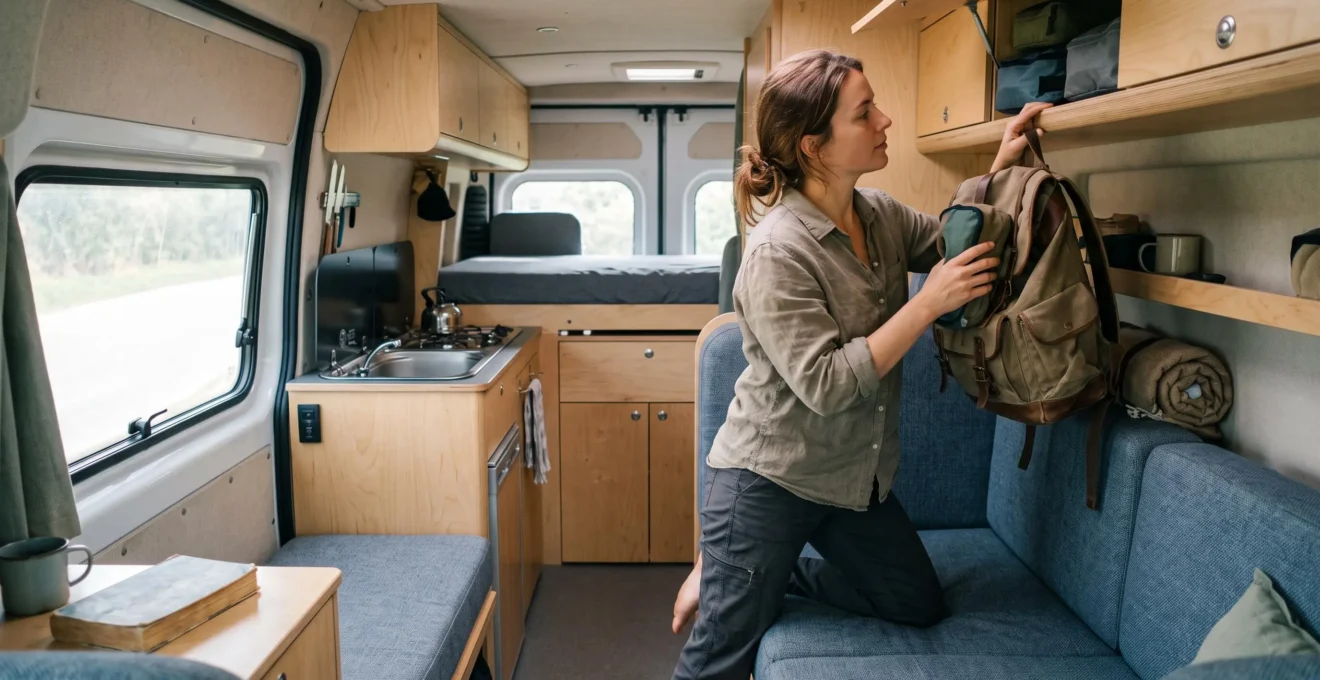
Compact campervans measuring between 5.5 and 6 metres in length typically provide the optimal balance for couples planning two-week journeys. These vehicles navigate medieval village streets, fit into standard parking spaces, and slip under most height barriers whilst still offering essential living amenities. The manoeuvrability advantage becomes apparent when exploring destinations like the Loire Valley’s historic towns or Alsace’s wine route villages, where larger motorhomes face access restrictions.
Full-size motorhomes exceeding 7 metres offer additional interior space and often include separate shower cubicles and permanent rear beds, yet this extra room comes with practical trade-offs. Parking becomes considerably more challenging, many picturesque town centres impose vehicle length limits, and fuel consumption increases noticeably. For travellers prioritising flexibility to explore spontaneously rather than staying exclusively at large campsites, compact dimensions prove liberating rather than limiting.
Manual versus automatic transmission
Transmission choice impacts both driving confidence and rental cost, particularly for those unaccustomed to handling larger vehicles. Manual gearboxes dominate the French rental fleet, reflecting broader European preferences, which means automatic transmission requests require earlier booking to secure availability. The cost premium for automatic transmission typically ranges between 10-15% of the base rental price, though this varies by season and supplier.
Automatic transmissions deliver tangible benefits when navigating hilly regions such as Provence or the Vosges mountains, eliminating clutch control concerns on steep village streets and reducing driver fatigue during longer motorway stretches. First-time campervan drivers often find the simplified operation allows greater focus on spatial awareness and route navigation, especially during the initial acclimatisation period.
Essential amenities versus luxuries
Distinguishing must-have features from nice-to-have extras prevents both overspending and uncomfortable compromises. For two-week habitation, certain amenities transition from luxury to necessity. A fixed double bed eliminates nightly conversion routines, refrigeration preserves fresh food between supermarket visits, and adequate heating extends comfortable season boundaries into spring and autumn months.
Onboard toilet and shower facilities divide opinion among renters. Couples comfortable using campsite facilities can manage perfectly well without these features, saving both rental costs and interior space. However, those planning to use France’s extensive network of aires de camping-car for overnight stops may value the self-sufficiency these facilities provide, particularly when arriving late or departing early.
| Feature | Compact (5.5-6m) | Full-size (7m+) |
|---|---|---|
| Typical capacity | 2 adults comfortably | 2-4 adults |
| Village access | Excellent | Limited |
| Parking ease | Standard spaces | Specialist bays required |
| Typical amenities | Bed, kitchen, fridge, often toilet | Bed, kitchen, fridge, shower, toilet |
| Fuel efficiency | Better (van-based) | Lower (truck chassis) |
| Best for | Flexible exploration, varied destinations | Campsite-based touring, longer stays |
Airport delivery versus city pickup: which option suits you best?
The choice between collecting a campervan at Charles de Gaulle Airport or travelling into Paris to collect from a city-based agency appears primarily financial at first glance, with airport delivery typically carrying a supplement. Detailed timeline analysis reveals a more nuanced calculation where time savings and logistical simplicity often justify the additional cost.
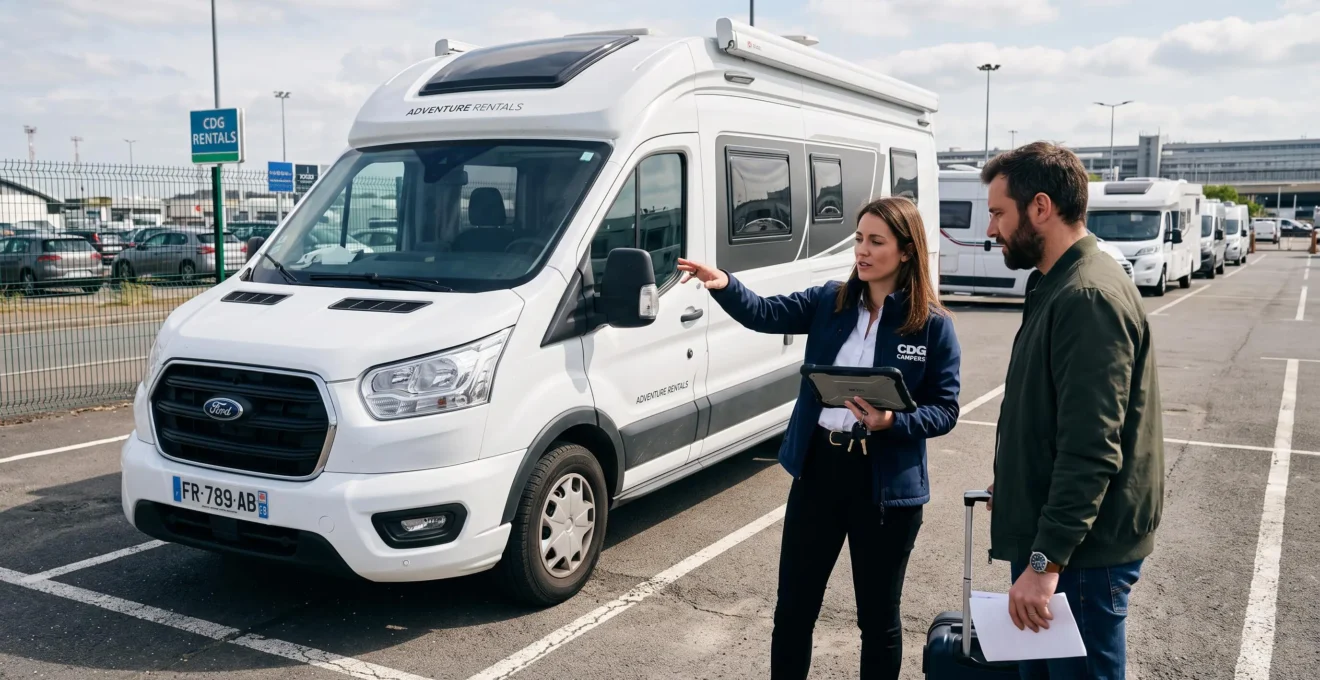
Services offering campervan hire at Paris-Charles de Gaulle eliminate the intermediate steps between landing and beginning the road trip proper. The streamlined process sees travellers clear customs, meet their rental representative at a designated terminal meeting point, complete vehicle handover documentation, and depart the airport within approximately two hours of touchdown.
Timeline comparison: airport versus city
Consider a typical scenario where a flight from London touches down at CDG at 14:00. With airport delivery, customs clearance completes by 14:45, the rental representative meeting occurs at 15:15, vehicle handover and documentation finish by 16:00, and the campervan joins the motorway toward Normandy or another destination shortly thereafter. The entire land-to-driving elapsed time spans roughly two hours.
The city pickup alternative follows a different trajectory. After the same 14:45 customs clearance, travellers board the RER B train to central Paris, arriving around 16:15 depending on the specific agency location. Reaching the rental office by taxi or further public transport adds another 15-30 minutes. Vehicle handover completes around 17:45, but navigating out of Paris during evening traffic potentially delays actual journey commencement until 18:30 or later. Total elapsed time stretches to 4-5 hours, with 2-3 hours lost compared to airport delivery.
True cost calculation
Airport delivery fees typically range from €50-80, which initially appears more expensive than city pickup. However, comprehensive cost accounting reveals hidden expenses in the supposedly cheaper option. RER B tickets from CDG to central Paris cost approximately €10-15 per person, whilst onward taxi or Uber transport to a rental agency adds another €15-30, bringing total transport costs to €25-45 before accounting for time value.
Those 2-3 hours saved represent nearly a full vacation day over a two-week trip. For travellers who’ve allocated limited holiday time to their French adventure, the opportunity cost of spending an afternoon navigating Parisian transport logistics instead of already exploring Normandy’s coast or settling into a first campsite often outweighs the modest price difference.
Practical airport pickup procedures
Rental companies offering CDG delivery typically arrange terminal-specific meeting points, with representatives waiting at designated areas near arrivals halls. Communication protocols vary, though most provide mobile contact numbers and clear instructions in booking confirmations. Handover processes mirror city-based procedures, covering vehicle orientation, control explanations, damage documentation, and contract finalisation.
Luggage management becomes considerably simpler with airport delivery. Travellers transfer bags directly from baggage reclaim to the campervan without navigating metro stairs, crowded train carriages, or city pavements. This proves particularly valuable for couples carrying two weeks’ worth of clothing, camping gear, and provisions.
| Factor | Airport Delivery (CDG) | City Pickup |
|---|---|---|
| Time from landing to driving | Approximately 2 hours | Approximately 4-5 hours |
| Transport cost | Included in delivery fee | €25-45 (RER + taxi/Uber) |
| Delivery fee | €50-80 typically | None |
| Luggage handling | Direct transfer | Multiple transitions |
| Paris navigation | Not required | Essential |
| Best for | Time-optimisation, stress reduction | Budget minimisation, Paris familiarity |
Essential preparations before hitting the road
Thorough preparation before departing the rental location prevents complications ranging from minor inconveniences to serious legal issues. International travellers face additional considerations beyond domestic renters, particularly regarding documentation validity and regulatory differences.
Documentation requirements
Under the post-Brexit agreement in force since 28 June 2021, UK driving licence holders can drive in France during short tourist stays using their original photocard licence, without translation or International Driving Permit, per the 1968 Vienna Convention on Road Traffic. This applies to standard car licences (Category B), which cover vehicles up to 3.5 tonnes—sufficient for most compact campervans.
Rental companies require valid photo identification (passport or national ID card), the booking confirmation reference, and a credit card for security deposit purposes. Debit cards face acceptance restrictions with many agencies, making credit card availability essential rather than optional. Verify these requirements during booking to avoid collection-day complications.
Insurance coverage essentials
Standard rental packages typically include third-party liability insurance and collision damage waiver, though excess amounts vary considerably between suppliers. Understanding the financial exposure if damage occurs allows informed decisions about purchasing additional coverage to reduce or eliminate excess payments.
Specialist considerations for campervans include windscreen damage coverage, tyre protection, and interior fitting insurance. Glass damage occurs more frequently in larger vehicles due to increased stone chip exposure, whilst unfamiliar vehicle height creates roof damage risks. Comprehensive roadside assistance provisions prove particularly valuable for travellers unfamiliar with French breakdown procedures and language barriers.
Pre-departure vehicle inspection
Dedicating 15-20 minutes to systematic vehicle checks before leaving the rental facility prevents disputes upon return and ensures all systems function properly. Photograph or video all exterior panels from multiple angles, documenting existing scratches, dents, or marks. Most smartphones automatically embed date and location metadata, providing verification if disagreements arise later.
- Exterior condition documentationPhotograph all panels, noting existing damage on rental paperwork, verify lights and indicators function correctly.
- Interior systems testingTest water taps, toilet flush, gas cooker ignition, heating controls, and refrigerator operation—resolve issues before departure.
- Essential equipment locationIdentify fire extinguisher, first aid kit, warning triangle, reflective vests, and tools—French law mandates specific safety equipment.
- Operational understandingRequest demonstration of waste water disposal, fresh water filling, gas bottle connection, electrical hookup, and any unfamiliar controls.
- Emergency contact confirmationSave breakdown assistance numbers, verify insurance documentation presence, understand out-of-hours contact procedures.
French driving regulations for campervans
Vehicle weight determines applicable speed limits in France, creating potential confusion for drivers accustomed to uniform car speeds. Under Decree No. 2006-1812 of 23 December 2006, vehicles with gross weight between 3.5 and 12 tonnes face caps of 90 km/h on motorways, rather than the 130 km/h limit for lighter vehicles, and 80 km/h on rural roads versus 90 km/h for cars.
Most compact campervans fall below the 3.5-tonne threshold, meaning standard speed limits apply, but verify your specific rental’s weight category during handover to ensure compliance. French motorway tolls (péages) accept credit cards, cash, and increasingly offer dedicated télépéage lanes, though rental vehicles rarely include subscription transponders.
Overnight parking regulations: France maintains varied rules regarding wild camping and overnight parking outside designated sites. Many municipalities restrict motorhome overnight stays in public car parks or scenic viewpoints. The country’s extensive network of aires de camping-car provides legal, affordable overnight parking specifically for campervans, often including waste disposal facilities and fresh water access for modest fees.
Top routes and destinations from Paris by campervan
Two weeks allows genuine exploration rather than rushed highlights, provided routes match realistic daily driving tolerances. Thematic itineraries focusing on specific regions or cultural threads deliver more satisfying experiences than attempting comprehensive national coverage from a single starting point.
Normandy coastal heritage loop (5-6 days)
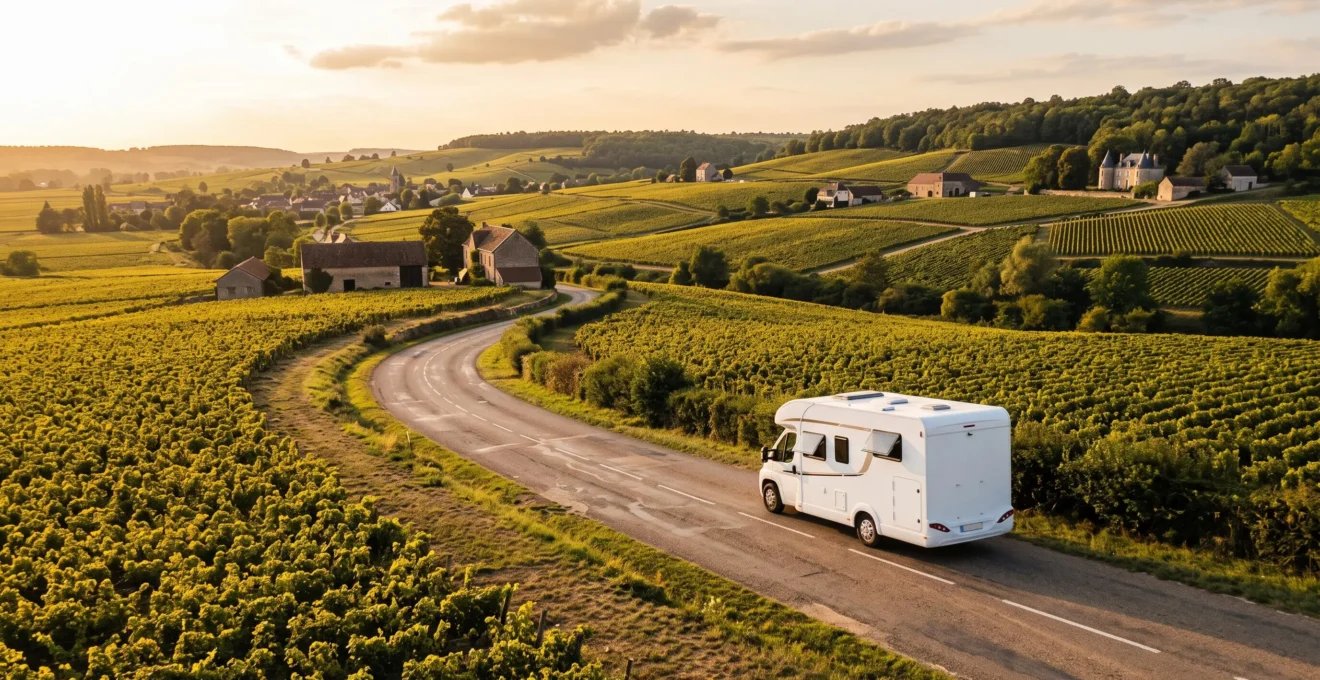
This westward route combines Second World War history with dramatic coastal scenery and Norman gastronomic traditions. Departing CDG, the medieval city of Rouen appears within 1.5 hours, offering cathedral architecture and half-timbered historic quarters. Continue to Honfleur’s picturesque harbour (another hour) before tracking the Côte Fleurie to the D-Day landing beaches near Arromanches and Omaha Beach.
Mont-Saint-Michel, the tidal island abbey, lies approximately three hours west of the landing beaches, demanding at least a full day for proper exploration and tide-watching. The return journey via Chartres Cathedral’s Gothic masterpiece creates a coherent historical and architectural narrative whilst avoiding simple backtracking.
Alsace wine and culture route (5-6 days)
Heading east from Paris, the Champagne houses surrounding Reims provide an elegant introduction to French wine culture within 1.5 hours’ drive. Strasbourg, roughly two hours further east, presents Germanic-French fusion architecture, European Parliament buildings, and the cathedral quarter’s medieval charm.
The Route des Vins d’Alsace winds through impossibly picturesque villages—Riquewihr, Eguisheim, Kaysersberg—where half-timbered houses cascade down hillsides between vineyard terraces. Colmar anchors the southern section before mountain passes through the Vosges reveal different landscapes entirely. This route rewards slower progression, with short daily drives allowing extended village exploration and wine cellar visits.
Northern capitals circuit (7-9 days)
Multi-country exploration becomes achievable within a fortnight when focusing on Northern Europe’s compact geography. Brussels sits just three hours north of Paris via comfortable motorway, providing Belgian beer culture, Art Nouveau architecture, and comic strip heritage. Bruges’ medieval canal centre lies another hour northwest, with Ghent’s university city atmosphere positioned between them.
Amsterdam reaches within two hours from Bruges, opening Dutch cycling culture, canal house architecture, and world-class museums. The return leg via Luxembourg’s dramatic gorge setting creates variety without excessive backtracking. This urban-focused route suits travellers prioritising cultural institutions and city exploration over rural landscapes, whilst still offering campervan flexibility unavailable to hotel-bound tourists.
Seasonal timing considerations: Normandy’s coastal appeal peaks during summer months but shoulder seasons (May, September) offer pleasant weather with fewer crowds at major D-Day memorial sites. Alsace wine harvest occurs in autumn, creating atmospheric vineyard activity though some villages become busy during October festivals. Northern European capitals remain accessible year-round, with spring tulip season adding particular appeal to Dutch portions of multi-country circuits.
Common questions about campervan hire in Paris
How much does campervan hire in Paris typically cost?
Rental costs vary considerably based on vehicle size, season, and rental duration. Compact campervans suitable for couples typically range from €80-150 per day during peak summer season (July-August), with lower rates during shoulder months (April-May, September-October). Two-week bookings often qualify for discounted daily rates, and factoring in eliminated hotel costs fundamentally changes the value calculation compared to traditional accommodation.
Do I need to speak French to rent a campervan at CDG?
Major rental companies serving international clients at Charles de Gaulle Airport typically offer English-language service, recognising the predominance of foreign travellers collecting vehicles there. Confirm language availability when booking to ensure smooth communication during vehicle handover and that all documentation appears in English. Emergency assistance lines similarly provide multilingual support for international renters.
Where can I legally park overnight in France?
Wild camping regulations vary significantly by region, with many municipalities restricting overnight motorhome parking outside designated sites. France maintains an extensive network of aires de camping-car—dedicated campervan areas offering legal overnight stops, often with waste disposal facilities and fresh water access for modest fees (typically €5-15). Campsite options range from basic municipal sites to fully-serviced commercial grounds, whilst some wineries and farms offer informal overnight parking with permission.
Can I take a French rental campervan to other European countries?
Most rental agreements permit travel within European Union countries, though some suppliers restrict certain destinations or require advance notification for cross-border journeys. Verify specific permissions and insurance coverage validity with your rental company before finalising multi-country route plans. Belgium, Luxembourg, Netherlands, Germany, and Switzerland typically present no complications, whilst some agencies restrict travel to Eastern European nations.
How far in advance should I book a campervan for summer travel?
Peak season demand (June-August) necessitates booking 3-4 months ahead to secure preferred vehicle types and sizes, particularly automatic transmission models which represent smaller fleet proportions. Shoulder season travel (April-May, September-October) offers more flexibility, with 4-6 weeks’ notice often sufficient. Airport delivery services may have limited daily capacity regardless of season, making early reservation advisable even during quieter periods.
What happens if the campervan breaks down during my trip?
Comprehensive rental packages include 24-hour roadside assistance throughout France and permitted travel countries. Contact numbers appear in rental documentation and typically offer English-language support. Depending on the issue severity, assistance ranges from roadside repairs to replacement vehicle provision. Mechanical failures attributable to normal use incur no charges to renters, though damage from misuse or negligence may affect insurance coverage.
Making the journey count from touchdown onwards
The difference between a campervan holiday that unfolds smoothly and one plagued by avoidable friction often crystallises in three key decisions made before departure. Choosing airport delivery over city pickup reclaims precious hours for actual exploration rather than logistical navigation. Matching vehicle specifications honestly to trip requirements—two people, two weeks, mixed terrain—prevents both overspending on unnecessary space and uncomfortable compromises on essential amenities. Completing thorough preparation, from documentation verification to systematic vehicle inspection, transforms potential stress points into confident departure.
Paris’s position as a European crossroads extends beyond geographical convenience. The capital serves as a springboard toward experiences as diverse as Normandy’s windswept cliffs, Alsace’s vine-covered hillsides, and Amsterdam’s canal-ringed museums, all accessible within comfortable daily drives. This variety within compact distances makes two-week itineraries feel genuinely substantial rather than rushed, provided travellers resist the temptation to cover excessive ground.
The romantic notion of van life—waking to different views, following spontaneous route changes, avoiding rigid hotel schedules—becomes practical reality when foundational logistics receive proper attention. Those who dismiss preparation as bureaucratic box-ticking often discover too late that documentation gaps, insurance misunderstandings, or vehicle familiarisation shortcuts create exactly the stress they’d hoped to escape. Conversely, travellers who invest time understanding French regulations, testing all campervan systems before departure, and planning realistic daily distances consistently report that the freedom promised actually materialises.
For couples standing at the threshold of their first extended campervan journey, uncertainty about rental processes, vehicle capabilities, and route feasibility proves entirely normal. The learning curve flattens quickly once the vehicle joins the motorway and initial unfamiliarity gives way to comfortable routine. Within days, parking manoeuvres feel natural, daily patterns establish themselves, and the adventure shifts from logistical challenge to genuine exploration. That transformation begins the moment wheels leave Charles de Gaulle, provided the groundwork supports it.